
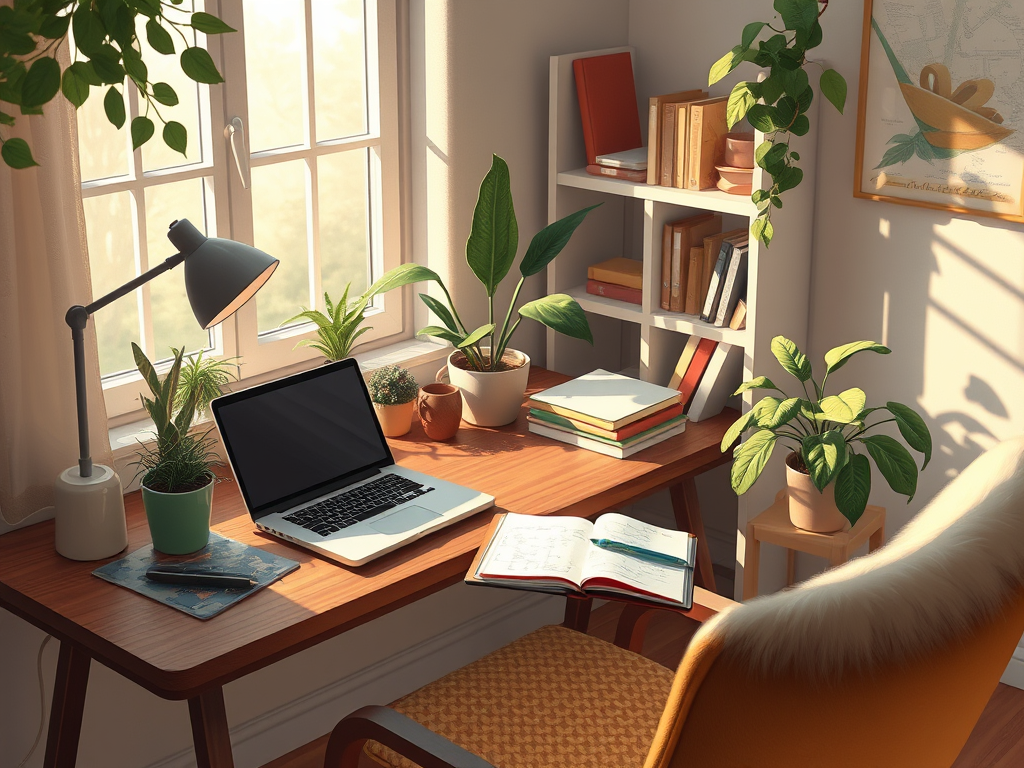
You ever just sit down at your laptop and… stare? The words are somewhere, theoretically. You know you had thoughts earlier. You’re pretty sure you’re still a person who can string sentences together. But right now? Nothing.
If that sounds familiar, you’re in good company. I’ve experienced this often, especially as a writer dealing with a chronic illness and a neurodivergent brain. Over time, self-care became integral to my work; it’s essential.
This grounding in real self-care, which is different from just chasing productivity, naturally leads to practical strategies for staying creatively engaged.
In the sections ahead, I’ll share some of the approaches that have helped me most—like writing sprints, creative breaks, finding the right writing rhythms, and ways to refuel your mind—so you can experiment and see what works best for you.
Focus Doesn’t Require a Complicated System
When I was first trying to figure out how to work with my AuDHD rather than against it, I went down deep productivity rabbit holes. I came up with about 15 competing systems, had zero clarity, and used a color-coded planner for 4 days.
What helped was simple: short writing sprints with built-in breaks. The idea—often called the Pomodoro Technique—is to work for 25 minutes, then take a genuine 5-minute break. Not a “check one more email” break. A real one. Get up, breathe, look at something that isn’t your screen.
What makes this work isn’t the timer. It’s the psychological effect of a defined container. You’re not writing forever, just for 25 minutes. The anxiety of an endless task shrinks when you put it in a neat and tidy little box of time.
I’d gently push back on the idea that a short session is lesser. Forty-five good minutes beats three hours of guilt-sitting any day. If you got words down and you didn’t hate yourself by the end, that was a good session. Full stop.
When the Brain Is Foggy, Stop Writing
Here’s something I had to learn the hard way: pushing through brain fog doesn’t produce good work. It produces bad work that you despise, and you’ll have to rewrite later, and it depletes the resources you need to come back tomorrow.
When creativity dries up, the best thing you can do is stop trying to force it and give your brain different input. Walk somewhere, even if it’s just around the block. Doodle without purpose. Sit somewhere and watch people do things. I don’t consider it a waste of time at all. Shutting off the brain this way helps you gather the raw material it needs to make connections later.
A change of scene can also work magic. If you always write at your desk and your desk feels like a place where ideas go to die, try a coffee shop, a library, a park bench, your porch, or a different chair entirely. The novelty matters. A new sensory context can nudge your brain out of whatever rut it is stuck in.
Picking up a hobby unrelated to writing is another one I swear by. Knitting, cooking, gardening, playing a video game, building something with your hands—anything that engages you in a way that isn’t about producing words. Your creative self doesn’t stop working just because you stepped away from the keyboard. Often, it does its best work exactly when you stop watching it.
Burnout Isn’t Just Being Tired
There’s a difference between needing a nap and needing to genuinely step back. Burnout is sneakier than fatigue. It shows up as dread, or as a low-level resistance before writing, the work feeling pointless, or doing everything without real connection.
Recognizing burnout before it fully lands is one of the most useful skills you can develop as a writer. Some signs to watch for: you’re constantly tired no matter how much you sleep, writing feels like a chore you’re avoiding, you feel cynical about your own work in a way that’s different from normal self-criticism.
If you notice those signs, please give yourself permission to take a real break away from work. This is triage for protecting your creativity. For a deeper look, the guide on burnout-proofing your creative life offers real strategies, especially for ND and disabled writers.
It also genuinely helps to talk to someone. Fellow writers, a good friend, a community that understands what you’re going through. There’s something about putting a name to what you’re feeling out loud—or in writing, even privately—it gives you back your power. You don’t have to process burnout alone, and you don’t have to white-knuckle your way through it. Ask for support when you need it.
If you are not sure where to start, there are online spaces where neurodivergent and chronically ill writers connect and support each other, like the ND Connect, the Chronically Cozy Creators Club, or the #DisabledWriters hashtag on Threads. Explore these communities or seek out local groups related to your interests; sometimes just knowing others are on a similar path can help more than you realize.
Rhythms Instead of Rigid Schedules
Sustainable writing lives aren’t built on perfect schedules. They’re built on rhythms and patterns that give you structure without trapping you in it.
For me, that means having loose rituals around writing time. A particular drink. A playlist that signals to my brain that we’re doing this now. A few minutes of low-pressure freewriting before I touch anything that actually matters. These aren’t productivity tricks so much as ways of getting yourself into a mode. They communicate to your nervous system: this is a safe time to create.
Movement matters too, especially when your body is complicated. I have chronic pain, and there are days when exercise in any traditional sense isn’t happening. But even gentle movement, stretching, a slow walk, changes something in my brain chemistry that makes words easier. If you have capacity for more, great. If you don’t, even a little bit counts.
Meditation and breathwork have helped some writers I know enormously. Personally, I find traditional meditation difficult to sustain, but even five minutes of sitting quietly, without consuming anything—no phone, no podcast, no input—does something useful. Your brain needs white space. We’re terrible at giving it that.
Keeping the Creative Well Filled
Ideas are weird. They rarely arrive on schedule. The best ones tend to show up when you’re in the shower or about to fall asleep or staring out a bus window, not when you’re sitting at your desk with your hands poised over the keyboard, willing something to happen.
This is why capturing ideas as they arrive matters so much. A notes app, a small notebook, a voice memo, whatever friction-free method works for you. Capture the spark when it shows up, even as a single sentence, even if it doesn’t make complete sense yet. In the future, you will be glad that past you wrote it down.
Surrounding yourself with things that refuel you is equally important. For me, that’s books—not always about writing, often not about writing—and music, art, being outside sometimes, and conversations with interesting people. If you’ve been meaning to reread something that genuinely moved you, do that. If there’s a playlist that puts you in a creative headspace, build it deliberately and use it.
Creative prompts can shake things loose when you feel stuck, too. Not because the prompt itself is the thing you need to write, but because it bypasses the internal gatekeeper. Try describing your day as if you were a detective narrating a case. Write about a place you loved as a kid from the perspective of the weather that day. Write a letter from a mundane object in your house that has opinions about what you’ve been doing with your life. These are a great way to jump-start your brain to get back to doing brain things like it’s supposed to.
The underlying principle is that creativity loves input. It’s not a spring that bubbles up from nothing. It’s more like a compost pile—you keep adding to it, and eventually it turns into something rich and useful. What you read, watch, observe, feel, and experience all go into the pile. Your job is to keep feeding it.
This Is the Work
Here’s what I really want you to take away from all of this: self-care for writers isn’t separate from the writing. It’s not the thing you do, so you can then go do the “real” work. It is part of the real work. The 25-minute sprint, the walk around the block, the nap you take instead of pushing through fog, the afternoon you spend doing something completely unrelated to writing—these are all part of the creative process.
You are not a writing machine. You are a person who writes. That difference matters. A person who writes needs rest, input, connection, movement, and sometimes distance from the page. Honoring that isn’t a weakness. It’s how you last long-term.
Writing can drain you, and it can also fill you back up, if you let it. When I need to recharge, one small action I rely on is listening to a favorite song—just taking a few minutes to let the music shift my mood and get me out of my head.
Take a moment to think about what truly helps you recharge as a writer. What’s one small action you consistently take to refuel when the words aren’t coming? Please share your strategy in the comments below to help inspire others in our community.



Leave a Reply