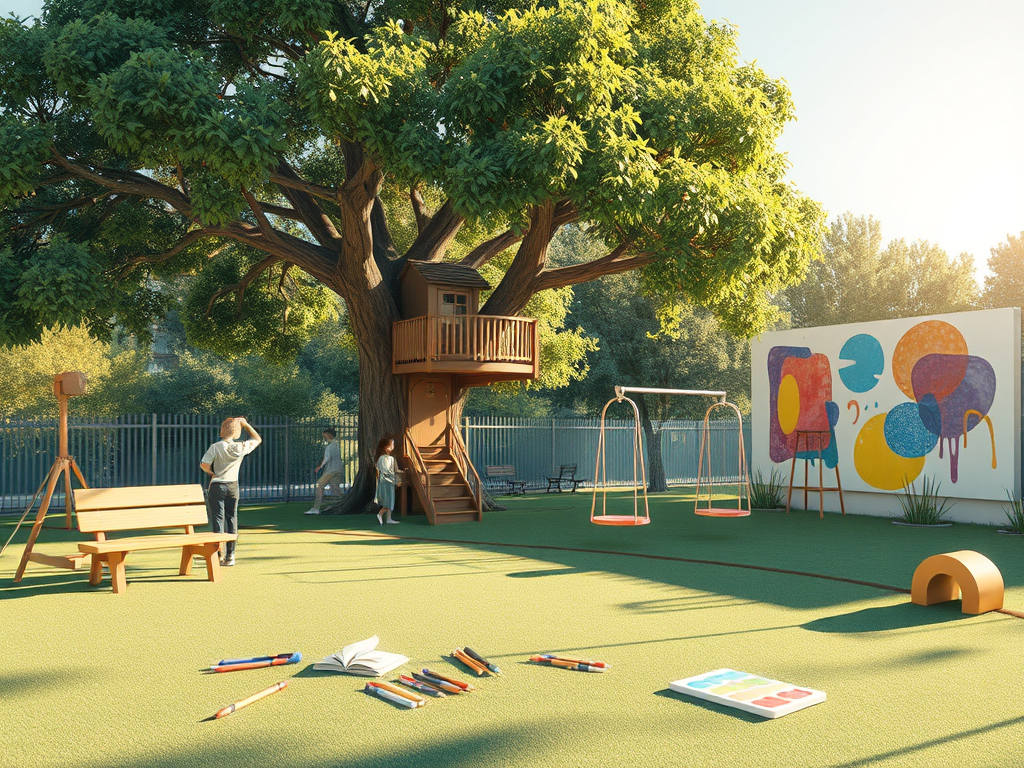
Many of us were conditioned in school to believe that creativity requires supervision. We were taught that we could draw, but only within the lines; we could write, but only on assigned prompts; we could explore ideas, but only if they adhered to a rubric; and we could play, but only when the bell rang. As adults, we often wonder why our creativity feels anxious, stiff, or downright exhausted. This happens because our brains were trained to wait for permission that never comes.
Here’s the important truth you should have learned long ago: Your brain needs unsupervised creative recess to support mental well-being and sustain your creative flow.
Why “Unsupervised” Matters
Most of the creativity we allow ourselves comes with restrictions: “I need to finish this scene today,” “This must be good enough to publish,” “Is this marketable?” and “What will people think?” Even when we’re alone, we often write as if an imaginary audience—teachers, editors, critics, or the internet at large—is watching us.
Unsupervised creative recess eliminates this audience. When no one is watching, your brain can:
- Risk weird ideas
- Explore tangents
- Play with voice
- Write badly for fun
- Discover insights you didn’t know you had
This kind of mental untangling allows your thoughts to stretch out rather than curl up under scrutiny. Creativity becomes less like a performance and more like breathing.
Your Brain Needs to Wander to Make Connections
Neuroscientists have known for a long time that our brains form the best insights when we’re:
- Daydreaming
- Doodling
- Pacing
- Showering
- Letting our thoughts drift
This “wandering mode,” also known as the default mode network, is where imagination thrives, memories remix, unexpected ideas collide, and creative clarity emerges. Embracing this natural process can help your audience feel more confident in trusting their own creative instincts.
Unsupervised creative recess is that playground.
Neurodivergent Brains Especially Need Unstructured Creativity
If you experience:
- ADHD
- Autism
- Dyslexia
- Executive dysfunction
- Perfectionism
- Rejection sensitivity
- Chronic burnout
If you experience:-ADHD-Autism-Dyslexia-Executive dysfunction-Perfectionism-Rejection sensitivity-Chronic burnout…then you’re likely familiar with the pressure that can shut your brain down. For you, play isn’t optional; it’s a necessary part of your self-care and growth. Unsupervised creative recess helps your nervous system reset and access creativity without freezing, making it an essential tool for your well-being.
Play Is Productive (Just Not in Capitalism’s Language)
Play may not appear productive from the outside, but inside, it is doing significant work. Play:
- Restores creative stamina
- Reduces the fear of failure
- Builds voice confidence
- Reconnects you to your purpose
- Generates raw material for future projects
- Strengthens the relationship between you and your creativity
Think of your brain as a field; without time to lie fallow or grow wildflowers, it cannot produce. Unsupervised creative recess nurtures the wildflowers.
How to Give Yourself Recess as an Adult Writer
You don’t need an entire afternoon; even five minutes can be beneficial. Try:
- Writing a scene with no specific purpose
- Doodling without a plan
- Exploring a character who may never appear again
- Jotting down a list of unusual metaphors
- Allowing yourself to daydream out loud
- Following a thought without the intention to “use” it
- Writing purely for sensory or emotional pleasure
Recess comes without assignments. It is a time to remember how to be human.
Final Thoughts
Your creativity isn’t merely a task to be supervised; it is a living entity that needs room to move, wander, make noise, and get its hands dirty. Give your brain the recess it needs, just as you wish someone had given it to you when you were younger. It’s not wasted time; it is the foundation for everything you will create next.