

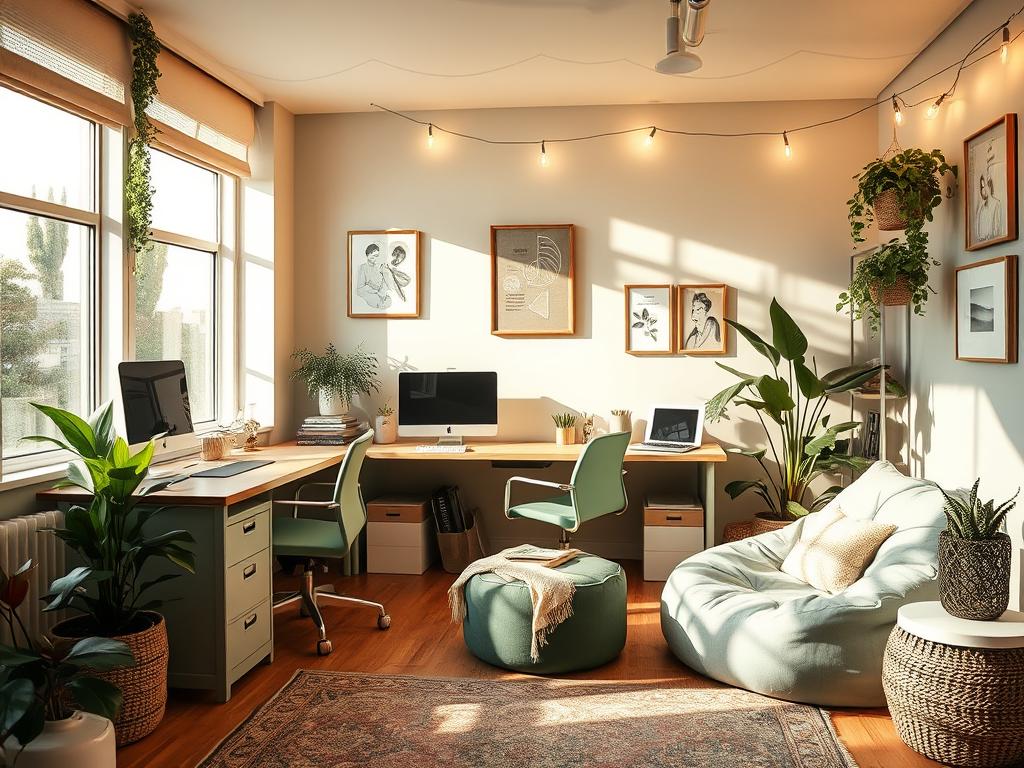
Looking to carve out a cozy little corner of calm in the chaos of your day? Whether you’re working from home, freelancing, studying, or simply craving a peaceful retreat, creating a sensory-friendly workspace can help you stay focused, grounded, and less overwhelmed.
Let’s explore how to design a quiet, cozy, and neurodivergent-friendly office that feels like a warm hug for your nervous system—without sacrificing function or style.
Quiet Workspace: Sound Control for Sanity and Focus
Noise is one of the fastest ways to derail your focus. Creating a quiet workspace starts with managing sound—especially if you’re sensitive to noise or easily distracted.
A few ideas:
- Soundproofing panels or heavy curtains can muffle outside noise.
- A white noise machine or simple desk fan creates a soothing audio backdrop.
- Try noise-canceling headphones for deep focus days.
Even small changes can make your space feel more like a sanctuary and less like a subway station.
Cozy Home Office Ideas: Comfort and Function
Comfort matters. And when you’re sitting for hours, your body deserves support.
- Ergonomic chairs are a worthy investment—your spine will thank you.
- Choose a desk with space to spread out and get messy (creatively).
- Add a comfy chair or a beanbag for breaks, brainstorming, or a quick stretch.
Your office doesn’t have to look corporate. Let it look like you—cozy, quirky, and full of life.
Calm Work Environment: Color & Lighting that Nourish
Let’s talk vibe. Your space should help you feel safe, centered, and inspired.
- Use calming colors like sage green, soft blue, or warm neutrals.
- Add pops of sunny yellow or coral if you need a boost.
- Natural light is ideal, but warm LED daylight bulbs work beautifully too.
- Bonus: Add string lights or fairy lights for a bit of magic.
Workspace Design Tips: Bring Nature & Personality In
A cozy workspace isn’t complete without a few grounding, joyful details.
- Plants add life and clean the air—try snake plants, pothos, or succulents.
- Add personal art, quotes, or photos to remind you who you are.
- Use a mood board or inspiration wall for visual motivation.
Your workspace should feel like yours—not a sterile productivity box.
Sensory-Friendly Office Flow: Organization Without Overwhelm
A tidy space helps a foggy brain focus.
- Use bins, drawers, and dividers to corral clutter.
- Keep your most-used tools visible, and the rest tucked away.
- Position your desk away from visual distractions (like windows or doorways).
And remember: movement and breaks are part of the flow. Set reminders to step away, stretch, hydrate, and reset.
Final Thoughts: Your Office, Your Sanctuary
Creating a sensory-friendly office is a gift to your future self. You’re not just making a prettier space—you’re building a calm, functional ecosystem for your brain and body to thrive.
Let your office reflect the kind of world you want to create: focused, gentle, and full of intention.
Have you built your cozy workspace yet? What’s your favorite sensory-friendly feature? Drop it in the comments or tag me in your desk photos—I’d love to see your setup!
Want more like this?

Autistic Burnout vs. Freelance Burnout: How to Tell the Difference (and What Helps)
Autistic burnout vs freelance burnout can share symptoms like exhaustion,…

Writing With the Tools You Have (Not the Ones You Think You Need)
Many writers hesitate to write, believing they lack the ideal…

Sustainable Research Strategies for Neurodivergent Writers
Many writers struggle with overwhelming research due to academic habits…


Leave a Reply