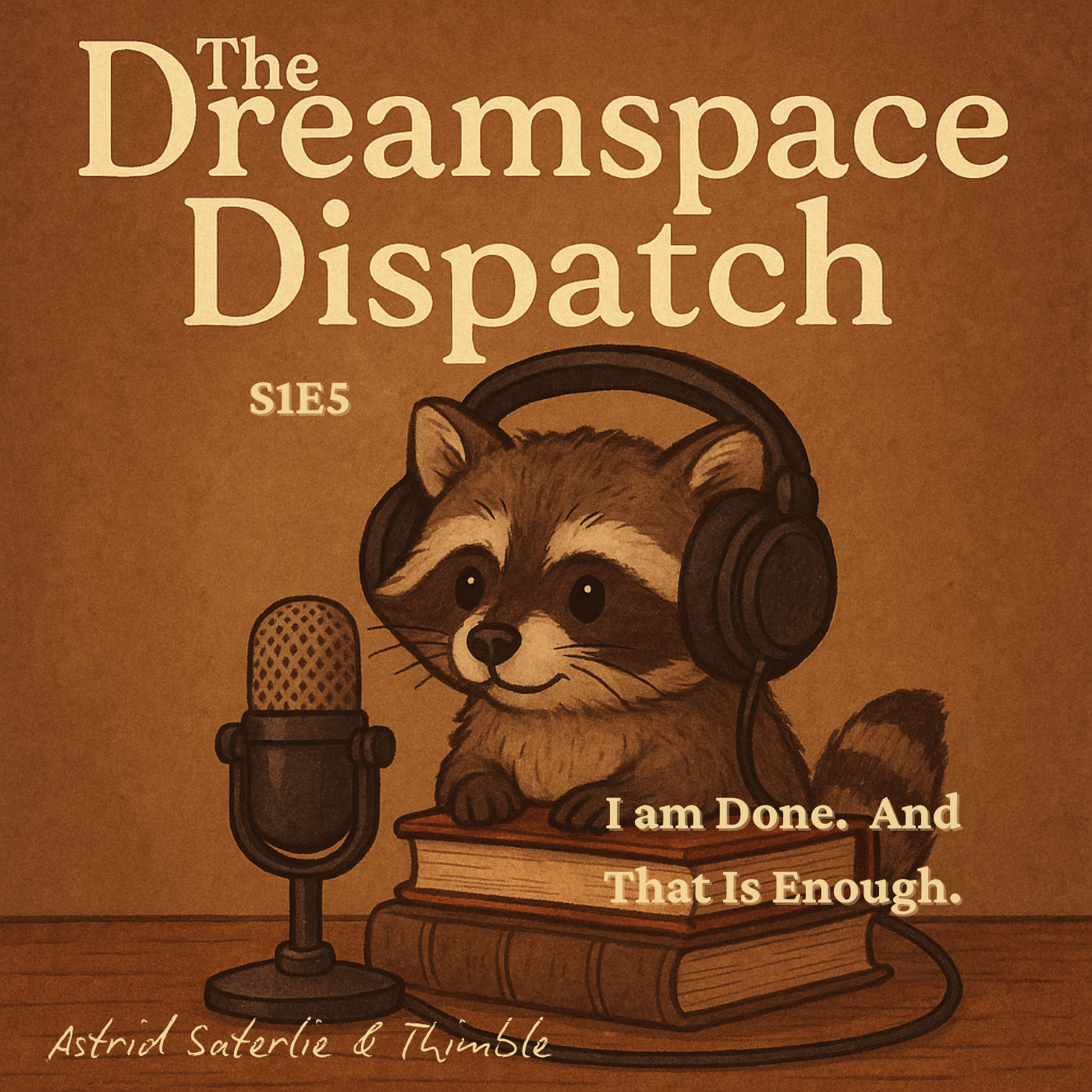
When You Finish Early and Still Feel Wrong: The Guilt of Being Done
There is a specific discomfort that arises when you close your laptop at 2pm, having finished everything you set out to do. It is not exhaustion, nor is it doubt about the quality of your work. It’s quieter and more persistent — a low-level unease that whispers: this can’t be right. Keep working.
If you have ever refreshed your inbox just to feel productive, opened a document with no real intention of editing it, or felt the need to explain to someone (or yourself) why you are allowed to rest, this article is for you.
That discomfort has a name. It is called productivity guilt, and it is an unfortunate, antiquated, and deeply conditioned response to systems that were never designed for your modern kind of work in mind.
The 40-Hour Workweek Was Not Built for Creative Work
The 40-hour workweek has roots in industrial manufacturing. It was standardized in the early twentieth century to regulate factory labor — physical, repetitive, shift-based work in which presence and output were essentially the same. If you were at the machine, you were producing. If you left, production stopped.
Creative and knowledge-based work does not function this way. Writing, research, editing, strategy, and content creation involve cognitive labor that happens non-linearly. Your best ideas come to you in the shower. A single focused hour can produce what eight distracted hours cannot. The relationship between time spent and value created is not fixed — it bends constantly depending on your energy, your environment, and the nature of the task.
Despite this, most of us have internalized the logic of the factory floor. We measure our worth in hours clocked rather than work completed. We conflate presence with productivity and rest with laziness. This is not a mindset problem you can fix with positive thinking. It is a structural inheritance — one that is especially heavy for freelancers, bloggers, and creatives who work independently.
Why the Guilt Hits Harder for Neurodivergent and Disabled Creatives
For autistic, ADHD, and chronically ill creatives, this guilt carries additional weight. Many of us already navigate a world that has communicated, explicitly or otherwise, that our ways of working are less legitimate. We may work in bursts rather than sustained blocks. We may need a longer recovery time after deep focus. We may accomplish more in two concentrated hours than in a full conventional workday — and then spend the rest of that day wondering whether we are doing enough.
Research on ADHD and cognitive fatigue suggests that the neurological effort required for focus and executive function is genuinely higher for many neurodivergent people. Chronic illness adds another layer: energy is not a renewable resource that resets every morning. It is finite, variable, and not always predictable.
When you finish early, it may be because you worked efficiently, intensely, and well. Your nervous system knows this. The guilt arrives anyway, imported from a system that wasn’t built for your reality.
The Myth of Visible Busyness
Somewhere along the way, looking busy became a form of professional credibility. This is sometimes called performative productivity — the practice of demonstrating effort rather than simply doing the work. It shows up as unnecessary meetings, lengthy email threads, filled calendars, and the cultural shorthand that equates exhaustion with dedication.
For remote freelancers and solo bloggers, this pressure does not disappear just because there is no office to perform in. It internalizes. You become your own audience for the performance, watching yourself to see if you are working hard enough, staying late enough, producing enough volume.
This internal performance is exhausting in a way that actual work rarely is. You are not just doing the job. You are also managing an ongoing negotiation with yourself about whether you have earned the right to stop.
Understanding that this is a learned behavior — not an accurate measure of your value — is the first step toward releasing it. The guilt is not information. It is noise from a system that does not apply to you.
What “Done” Actually Means for Independent Creatives
One of the most useful reframes available to freelancers and bloggers is shifting from time-based to outcome-based thinking. This is not a productivity hack. It is a more accurate description of how creative work actually operates.
Ask yourself: what did I set out to accomplish today? If you can answer honestly that you completed it, you are done. Not conditionally done. Not done pending sufficient time passage. Done.
This requires clarity about your actual work goals, which is harder than it sounds when you work independently. Without external structure, “work” can feel boundless. The inbox is always there. There is always another article to write, another keyword to research, another draft to revise. Without defined endpoints, you cannot reach them.
Building a practice of setting clear, finite daily intentions is one of the most protective things you can do for your mental health as an independent creative. Not a sprawling to-do list — a small, specific set of outcomes. When those outcomes are met, the workday has a shape it can complete.
Our guide to sustainable blogging rhythms for neurodivergent writers explores how to build this kind of structure without rigidity or overwhelm.
Separating Identity from Output
Productivity guilt is often tangled with something deeper: the belief that your value as a person is proportional to your output. This is one of the most corrosive ideas in contemporary work culture, and it lands particularly hard on people who already navigate systems that have questioned their contributions.
If you rest and feel worthless, that is worth noticing. It is a signal that your sense of self has become contingent on what you produce, which means rest will always feel like a threat rather than a necessity.
Occupational therapists and disability advocates have long argued that rest is not the absence of work. It is part of the work cycle. Recovery, integration, and processing are not idle states — they are what make continued, quality output possible. This is especially true for autistic and chronically ill creatives whose nervous systems require genuine downtime to function sustainably.
You are not your word count. You are not your publishing frequency. You are a person who makes things, and making things requires a whole life — not just the hours that look like labor.
Practical Ways to Work With This, Not Against It
Understanding the source of productivity guilt is useful. Having somewhere to put that understanding is more useful. Here are some concrete ways to build a working life that makes space for genuine completion.
Define your ‘DONE’ before you start. At the beginning of a work session, write down exactly what you are trying to accomplish. Be specific and finite. “Work on the blog” is not a task — “draft the introduction to the SEO article” is. When that specific thing is finished, the session can end.
Track outcomes, not hours. Instead of measuring how long you worked, record what you completed. Over time, this builds an accurate picture of your actual productivity, free from clock-watching distortions. It also provides evidence to offer yourself when guilt arrives.
Create a closing ritual. The guilt often arrives because there is no clear signal that work is over. A closing ritual — reviewing what you completed, writing a brief note for tomorrow, closing all your tabs, making tea — gives your nervous system a transition cue. Research on routines and anxiety suggests that predictable transitions reduce the ambient stress that makes it hard to fully disengage from work.
Notice the performance. When you catch yourself doing work-adjacent things (scrolling professional social media, reorganizing files, opening documents with no real intention), pause and ask: Am I doing this because it needs doing, or because I am trying to look busy to myself? This is not a judgment. It is information.
Speak the guilt aloud. For many neurodivergent people, naming an experience reduces its intensity. Saying “I finished and I feel guilty, and I know that guilt is not real feedback” is a form of cognitive processing that can interrupt the loop. Cognitive behavioral frameworks suggest that labeling emotional states reduces their automatic influence on behavior.
The Deeper Work of Trusting Yourself
Ultimately, moving through productivity guilt is a practice of self-trust. It requires believing, against a great deal of cultural conditioning, that you are a reliable judge of your own work. That’s when you feel done; you might actually be done. That rest is not a reward you have not yet earned — it is a natural part of a sustainable creative life.
This does not happen overnight. It is built slowly, through small acts of trusting your own sense of completion and discovering that nothing collapses when you stop early. The blog still exists. The work still has value. The world continues.
For neurodivergent and disabled creatives especially, building that trust is an act of reclamation. The systems that created this guilt were not designed to include you. You are allowed to design something different.
When you finish your work and close your laptop at 2pm, you are not getting away with something. You are simply done.