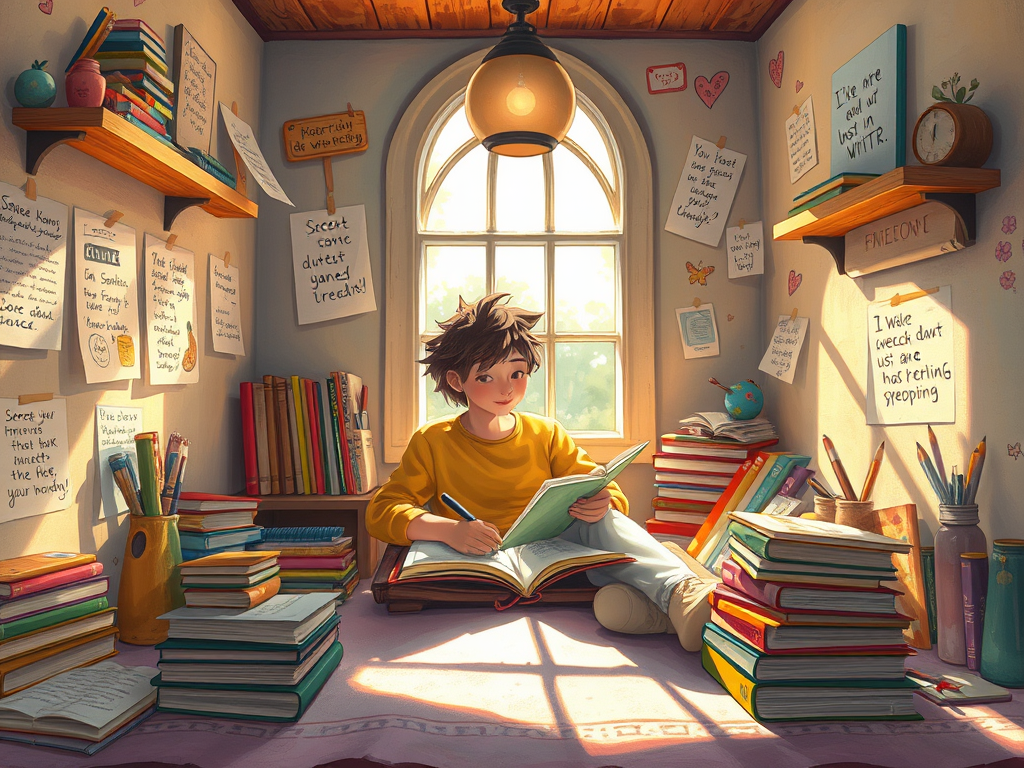
Writers are often instructed to “treat it like a job.” This includes building a routine, setting goals, tracking word counts, and optimizing time. While structure and deadlines do matter, there’s an important truth that is frequently overlooked in professional writing circles: Writers need play to sustain their creativity and stay engaged. Without play, the creative energy can dwindle.
We don’t create simply because someone is watching us with a calendar; we create because there’s an inner desire to wander, mentally, imaginatively, and energetically toward what feels alive.
Unfortunately, many of us were trained out of play at an early age. School taught us to produce on command, work taught us to prioritize output over curiosity, and capitalism conditioned us to think that creativity must be monetized to have value.
But play? Play is the antidote to all of that.
Play Makes Writing Sustainable
Writing driven solely by obligation leads to a slow erosion of joy. In contrast, play is:
- Low-stakes
- Low-pressure
- Explorative
- Imaginative
- Restorative
Play might look like trying out a new metaphor simply because it surprised you, drafting a paragraph for a story you’ll never publish, freewriting a scene for the sheer delight of expressing a new voice, or doodling in a notebook and discovering a character lurking behind a margin note. For example, doodling characters can lead to unexpected story ideas, keeping your motivation high and your creativity flowing.
When you integrate play into your creative life, you’re not “wasting time.” You’re replenishing the well from which your writing draws.
No Deadlines = No Performance Mask
As soon as something has a deadline, your brain shifts into performance mode. Play, however, reassures the audience that their efforts are valued beyond productivity, easing pressure and fostering confidence.
Instead of asking, “What should I be making?” Play invites the audience to consider, “What do I want to make right now, with no consequences?” This sparks a feeling of curiosity and openness, making the idea more inviting.
This is especially important for neurodivergent writers who may grapple with:
- Perfectionism
- Rejection sensitivity
- Fear of judgment
- Executive dysfunction related to pressure
By removing deadlines, you allow your nervous system to breathe. Creative flow doesn’t emerge from pressure; it flourishes when you permit yourself to explore.
Play Leads to Better Work, Ironically
Here’s the interesting twist: when you engage in play, your “serious” writing often improves. Play opens the door to:
- Original ideas
- Unexpected connections
- Increased confidence in voice
- Experimentation
- Deeper emotional resonance
- New structural possibilities
Some of your best sentences may come from moments when you weren’t even trying, and your strongest concepts can arise when you follow curiosity like a trail of breadcrumbs. The quality of your work improves when you let your creativity warm up, stretch out, and roam freely before demanding performance from it.
Play Keeps You Connected to Your Creativity
Writing driven solely by work can make your creativity feel like a tool. In contrast, play reminds you that your creativity is a companion, a partner, a friend, or even a mischievous raccoon rummaging through the attic of your imagination. You learn to follow your creativity instead of merely directing it, rekindling the joy of writing, not for deadlines, paychecks, algorithms, or expectations, but simply because it feels good to create something.
How to Add More Play Into Your Writing Life
Here are some gentle suggestions to get started:
- Write a paragraph with no purpose.
- Try a writing prompt with the intent of “just for fun.”
- Daydream intentionally, without guilt.
- Allow yourself to write poorly on purpose for ten minutes.
- Follow a strange idea, even if you abandon it after one page.
- Explore a voice, setting, or character without a long-term plan.
Play isn’t the opposite of work; it’s the fertile soil that makes work possible.
Final Thought
Creativity is not a machine to operate; it’s a living system that you nurture and care for. By making space for play as a vital part of your writing, you foster hope and a sense of ongoing growth.
And the work you produce from this vantage point? It’s richer, more accurate, and built to last.