There’s a moment in almost every creative project where you look at what you’ve built and think—I want to start over.
Not just tweak or revise a few chapters, but scrap everything and return to a blank page, fueled by naive optimism.
I had that moment with my novel a few months ago.
I’m writing my first book. It’s called Allison’s Awakening, and it’s the first in what I intend to be a series—cozy adult fantasy, neurodivergent main character, gentle magic, real emotional weight. It’s a story I love deeply. The characters feel real to me in a way that occasionally makes me cry when I’m writing them.
And a few months ago, I wanted to burn it down.
Not because the story was bad. Not because the characters stopped feeling real. But because something was off in a way I couldn’t quite name at first. It was reading younger than I intended. The voice was sitting somewhere in Young Adult territory when what I was always writing was Adult Cozy Fantasy — and those are genuinely different things with different tones, different stakes, different emotional registers.
Young Adult fiction tends to center the urgency of becoming—big emotions, dramatic turning points, the intensity of figuring out who you are for the first time. It’s a wonderful genre. It’s just not what this book was supposed to be.
Adult Cozy Fantasy is quieter and warmer. It’s about finding peace and magic in the life you’re already living. Healing. Belonging. The gentle radical act of finally believing in yourself after years of being told you were too much or not enough.
That’s Allison’s story. And it wasn’t quite landing that way yet.
My brain jumped to the most dramatic solution: start over. Clean slate.
I didn’t.
But when I sat with it, I realized something important.
The bones were good.
The story and characters were good, and its heart was exactly right. The problem was on the surface: the voice, the pacing, the way scenes were written. The foundation, though, was solid.
So instead of starting over, I went back in. I’m using the existing chapters as scaffolding and going through them carefully. I’m expanding and deepening quiet moments and sensory details. This, taking time to change things, to rewrite, has been letting the book grow into what it was always meant to be.
It’s slower work than just taking it as it started off. It’s harder in some ways. But it’s also more rewarding. The bones are good. The story I love and the characters I created are still in there. I’m not rebuilding from nothing. I’m taking the seeds I’d planted, dug them up, put them into better soil, and now I’m watching them grow and blossom as they were always meant to
This is spring work: not creation from nothing, but tending what survived winter and allowing it to become more fully itself.
If you’re a first-time author—or honestly any kind of creator sitting on a project that isn’t quite working—I want to offer you this before you reach for the metaphorical match:
Ask yourself if the bones are good.
If the answer is yes, you don’t need a blank page. You need fresh eyes, a little distance, and the willingness to do the slower, more rewarding work of revision instead of the dramatic satisfaction of starting over.
Starting over feels good for about twenty minutes. Then you’re just sitting in front of a blank page, with all the same problems and none of the work you’ve already done.
The bones are worth saving. Go back in.
Author’s Note: Allison’s Awakening is in progress and getting closer every day. Over the coming months, I’ll be sharing behind-the-scenes glimpses, early peeks, and updates as this book becomes what it’s meant to be. Watch this space—she has things to say.
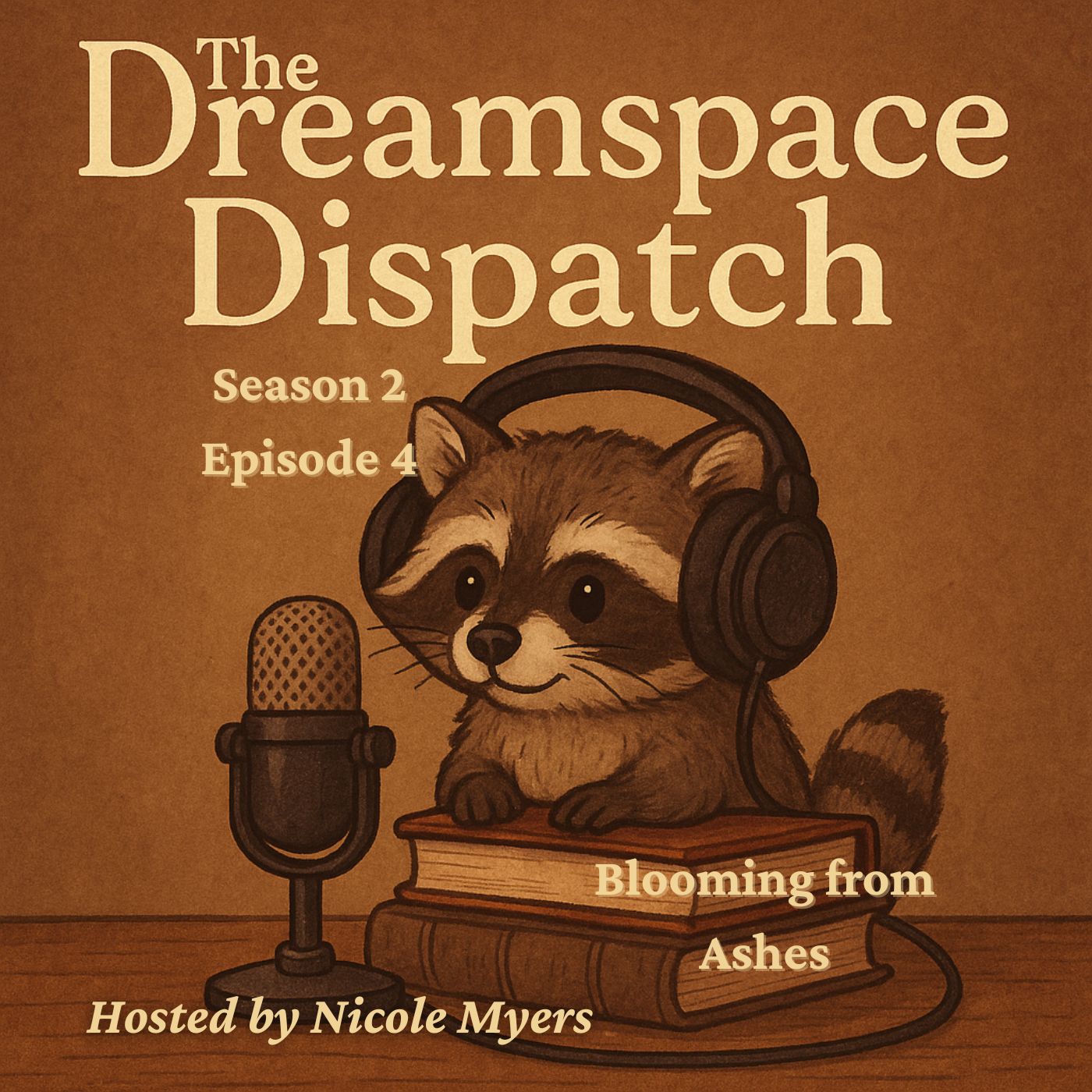
This post accompanies Season 2 Episode 4 of the Dreamspace Dispatch podcast—Blooming from Ashes. You can listen wherever you get your podcasts or watch on YouTube.