
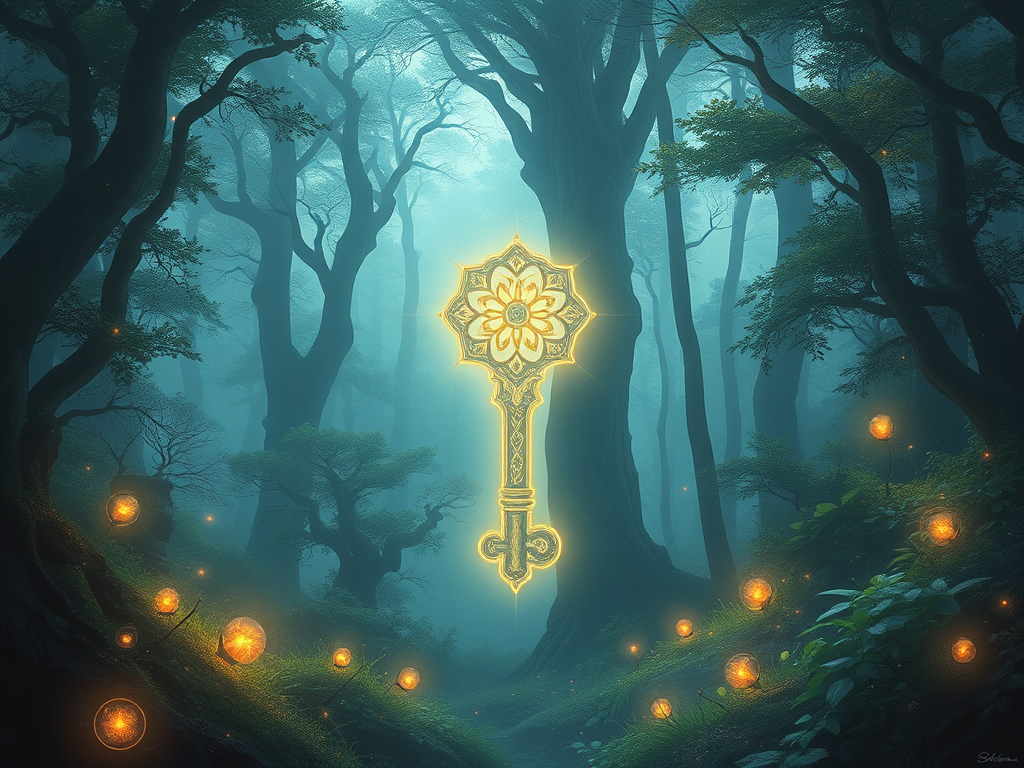
Allison Lewis was always the weird kid.
Not weird in the endearing, quirky way that got you cast as the lead in a coming-of-age movie. Weird in the way that made other children go quiet when you sat down at their lunch table. Weird in the way teachers noticed but never addressed. It wasn’t the kind of weird with a name or a diagnosis—not yet. It lived in the spaces between things: in the way she covered her ears during fire drills while everyone else just walked. In the way she’d rather draw a map of an imaginary country than play kickball. In the way, she could feel the fluorescent lights buzzing above her like an itch behind her skull that no one else seemed to notice.
She was the strange one. The black sheep. The square peg in a round hole that no amount of sanding could reshape.
Growing up, the bullying was relentless—a constant, grinding presence that followed her everywhere. It didn’t matter what she joined: the literary club, the art club, 4-H, or Girl Scouts. She made friends—a small, tight-knit circle who got her, or at least tolerated what they didn’t understand. But the wider world was less forgiving. She was shoved in hallways. Notebooks knocked from her hands. Once, in seventh grade, a boy grabbed a short story she’d worked on for weeks. He read the first line aloud in a mocking falsetto and then tore it in half. The rest of the class laughed. She could still hear the paper ripping if she thought about it too long. She tried hard not to.
This was the eighties and nineties. Teachers watched but barely flinched. Or, if they did, it was with that soulless shrug and tired phrase: “Kids will be kids.” No one took it seriously, and soon, Allison stopped hoping they would. She shrank herself, becoming as small as breath. She mastered avoidance—the geometry of unseen routes, lunch alone behind locked doors, bathroom stalls fortified with rusted locks. Silence became her stone—cold, weighty, and the only shelter.
As she grew older, the wounds burrowed in, festering—water leaking into the cracked foundations of her life and freezing, splitting her from within. The endless social agony of her childhood crusted over into something unyielding: depression. Anxiety knotted itself up her throat at the thought of crowded rooms. No sleep softened the exhaustion that came from living so raw.
The doctors had their labels ready. Bipolar II disorder. Social anxiety. She collected diagnoses like other people collected stamps—each one a small, official rectangle that was supposed to explain her, but never quite did. The labels helped, in the way a map helps when you’re lost in the wrong forest entirely. They pointed to something. They just pointed to the wrong thing.
But Allison didn’t know that yet. So she did what the labels told her to do: she took the medications, attended the therapy sessions, and learned to stay away from situations that made her anxious, wary, or scared. She got very good at staying away. She got so good at it that sometimes she forgot there was a world to stay away from.
The years between her twenties and thirties were a blur of false starts and hard landings. She remembered the relationship in her mid-twenties. A man told her she was “too much” and “not enough” in the same breath. He chipped away her sense of self with the patience of a sculptor working in reverse. There was a string of jobs that never quite fit. Retail positions where the fluorescent lights made her temples throb. Office work with open floors felt like being trapped in someone else’s noise. Freelance gigs paid just enough to survive. Never enough to breathe.
She moved. More than once. Each new city was supposed to be a fresh start, a clean slate. Richmond. Baltimore. Somewhere in between that she’d rather not think about. Each time, she packed her boxes and told herself this was the one that would stick.
Gettysburg stuck.
She found a little row house on a quiet-ish street, with a shared wall that would later become the bane of her existence and a backyard just big enough for a small dog to do his business. She moved in with her two companions: Mouse, a sleek gray cat with golden eyes who had been her anchor through the worst of it, and Spud, a Lhasa Apso with a scruffy beard and a talent for looking profoundly unimpressed. Mouse claimed the windowsill. Spud claimed the couch. Allison claimed whatever was left.
It was the smallest life she’d ever lived, and for a while, it was enough. But eventually, the quiet routine began to shift.
That shift—the real turning point—came in her early thirties, during a routine appointment that turned out to be anything but.
Her doctor—a patient woman with reading glasses perpetually perched on her forehead—had been reviewing Allison’s history. The long list of medications that helped but didn’t fix. The therapy notes stretch back years. The patterns kept repeating, no matter how many coping strategies she stacked against them. And then, almost casually, as if she were suggesting a new brand of multivitamin, the doctor said, “Have you ever considered being evaluated for autism? And ADHD?”
Allison blinked. “Autism?”
The word landed strangely in her mouth, like biting into something familiar and finding a texture she didn’t expect. She knew autism. Her brother was autistic. But he was nothing like her—or so she’d always believed. And she was adopted, which meant they didn’t share genetics, which meant it couldn’t possibly be the same thing. That was the logic, anyway. Clean. Airtight. And, as it turned out, completely wrong.
She did what she always did when faced with a question she couldn’t answer: she researched it to death. She read studies, memoirs, and blog posts by women diagnosed late in life. She watched videos by autistic creators who described their inner worlds with a specificity that made her chest ache, because she recognized every single thing they were saying. The sensory overwhelm. The masking. The exhaustion of performing normalcy in a world that wasn’t built for her. The special interests that burned like wildfire and the burnouts that followed like ash.
Piece by piece, the picture assembled itself, and it looked exactly like her.
The official diagnosis came on a Tuesday afternoon, via a phone call she took sitting on her kitchen floor. Her legs wouldn’t hold her. It was true. She was autistic. With that single confirmation, decades of confusion, shame, and self-blame rearranged themselves. Everything finally, mercifully, made sense. Every bully who’d targeted her. Every job that hadn’t fit. Every relationship that had crumbled from her being “too much.” Every label the doctors had used was like a band-aid over a wound they could not see.
The things that had made her a target her entire life were also the things that made her extraordinary. She just hadn’t known what to call them.
For a few years after the diagnosis, Allison burned bright.
She threw herself into her passions with the kind of ferocity that only comes from finally understanding why you’re drawn to them. Writing had always been the constant—the one thread she’d never entirely let go of, even in the darkest stretches. She’d been a storyteller since before she could spell properly, filling notebooks with tales of impossible places and creatures that spoke in riddles. Now, with the diagnosis as a lens, she could see her creative mind for what it truly was: not a flaw to be managed, but a gift to be honed.
She went back to school. Philosophy and English—disciplines that taught her how to think, not what to think, and how to put it on the page in a way that made people lean in. She wrote. She painted in acrylics, gouache, watercolor, and digital. She lost herself in knitting, crocheting, and spinning. She did voice acting for audiobooks, lending her voice to other people’s stories while quietly building her own. The fire inside her was bright, hungry, and real.
No one warned her about autistic burnout.
It wasn’t like regular burnout. You can’t just take a vacation and come back refreshed. Autistic burnout was a systems failure. A full collapse of every compensatory mechanism she’d built over a lifetime. It was like running a machine at double capacity for decades, then watching every gear strip at once. The crash was total. She lost the ability to write. Lost the desire to write. Some days, she lost the ability to want much of anything.
Recovery wasn’t measured in weeks or months. It was measured in years, and in that long stretch of time, Allison slowly began to rediscover herself.
In the long, slow crawl back to herself, grief found her—or perhaps it had been waiting there all along, patient as a stone.
Mouse had passed many years earlier, during a time when Allison could barely keep herself upright, let alone mourn properly. She’d held him at the end, felt the last warm breath leave his small gray body, and then set about the business of not thinking about it for as long as humanly possible. She’d gotten Pebble not long after—a sweet, quiet cat with a grey tabby coat and a purr like a small engine. Pebble had a gift for finding the exact spot on the couch where a sunbeam fell and staying there, utterly still, as if she’d made a private agreement with the light.
Now, Pebble, after 16 years, was dying.
It was slow, the way these things often are with cats. A gradual dimming. The appetite faded first. Then the playfulness. Then, she was willing to jump to her favorite perch by the window. Allison’s house became a hospice ward of one. Her nerves raw and frayed. Her days are organized around medications, vet appointments, and the terrible arithmetic of quality of life.
She tried to talk about it. She called family members who were too busy. She reached out to friends who didn’t quite understand. The fundamentalist Christian family she’d been born into—or rather, adopted into—had never truly accepted her for who she was. She hadn’t been to a large family gathering in over twenty years. There was no safety net. No soft place to land.
So she turned to the one thing that had never failed her, even when everything else had. She turned to the page.
The words came back slowly, like circulation returning to a limb that had fallen asleep—tingling, unsteady, almost painful in their aliveness. At first, she wrote only for herself. Journal entries. Raw, unfiltered pages of anticipatory grief, of fury and fear, and the specific loneliness of watching something you love slip away in increments. She wrote about death. About learning to live without. About the strange, guilty relief of imagining a future where the worst had already happened and she was still standing.
And then, because bills didn’t care about grief and landlords didn’t accept journal entries as rent, she began writing for money again. Freelance articles. Client work. The kind of writing that paid but didn’t feed her soul—or so she thought.
But something had shifted. In the act of writing her way through the grief, she’d stumbled onto something she hadn’t felt in years: flow. That rare, luminous state where the words came faster than thought, where hours collapsed into minutes, where the rest of the world went soft and quiet, and all that existed was the sentence taking shape beneath her fingers. She’d known this feeling before, long ago, before the burnout swallowed it. She’d even given it a name, back when she first discovered it.
It was what she called that place in her mind where stories lived before they were written. The space between waking and dreaming where ideas shimmered just out of reach, where characters spoke in voices she hadn’t invented, where entire worlds assembled themselves from the raw material of memory and longing and wonder. She’d always thought of it as a metaphor. A writer’s shorthand for the creative unconscious. A flow state with a poetic name.
She was wrong.
The Dreamspace was real. It had always been real. And it had been waiting for her—patiently, persistently, across years of silence and grief and forgetting—to come back.
It was full of old magic and new friends who would help her reconnect with an ancient lineage of creators and dreamers she never knew she belonged to. A patient, and glowing android named Sol who spoke in riddles that turned out to be truths. A glittery rainbow armadillo named Felipe, who firmly believed that most problems could be solved with the right snack. And a fuzzy little raccoon named Thimble, who had a strange obsession with raspberries, a leather satchel full of secrets, and a habit of showing up at the worst possible times—which always, somehow, turned out to be exactly the right ones.
But that part of the story hasn’t started yet.
It’s about to.



Leave a Reply