

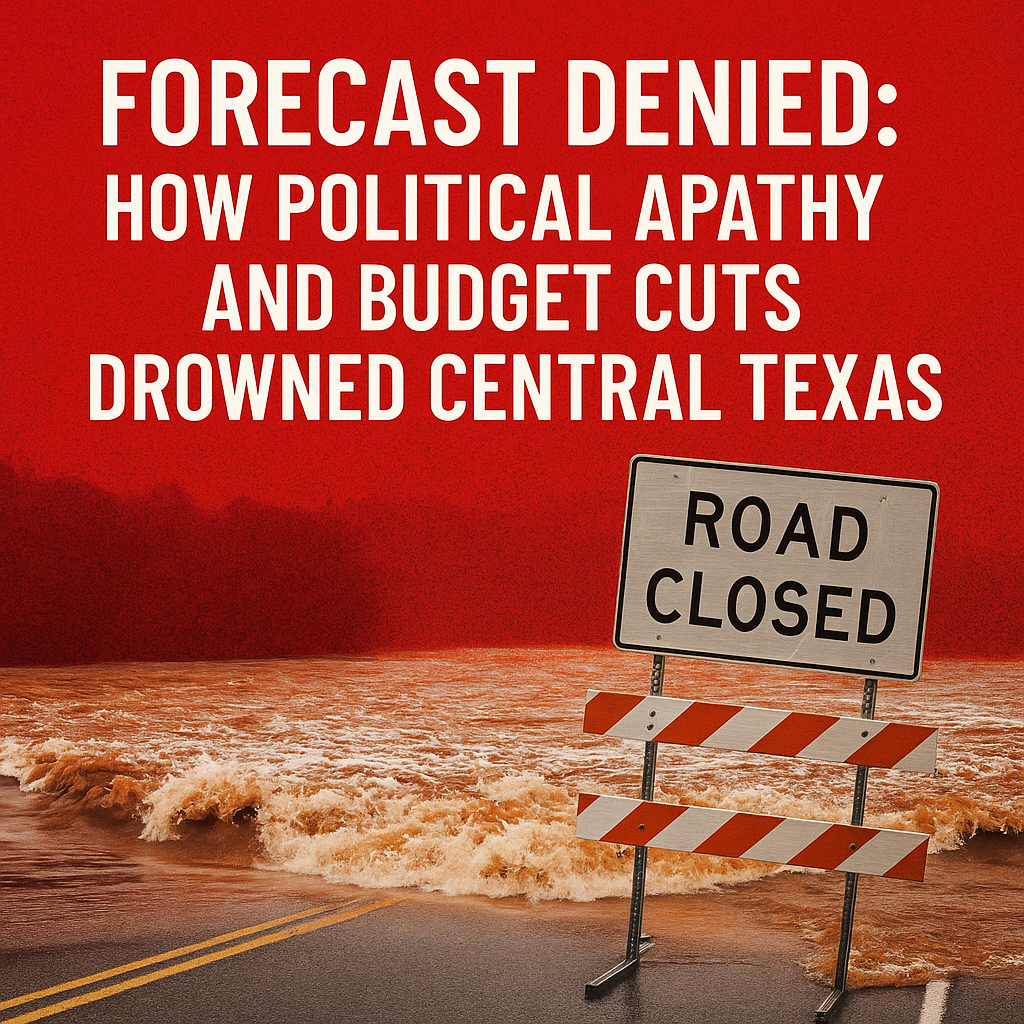
They never stood a chance.
In the still hours before dawn, the Guadalupe River rose 26 feet in under an hour, swallowing roads, camps, homes, and lives. The warnings were either too late or never came at all. Now, Central Texas is mourning at least 80 dead—with 40 still missing—many of them children at a girls’ summer camp.
This storm was not a random act of nature. It was a preventable event that, in a United States reshaped by political ideology and ‘efficiency’ mandates, the very systems built to warn and protect were weakened, defunded, or ignored. This wasn’t just a storm—it was the outcome of preventable systemic breakdown—a tragedy intensified by a government that now treats preparedness as a luxury, not a responsibility.
What Happened
On the night of July 4 into the early morning of July 5, Central Texas experienced catastrophic flash flooding after nearly a foot of rain fell in just a few hours. Kerr County was hit hardest by the storm. The Guadalupe River surged over 26 feet in just 45 minutes, destroying everything in its path. Among the most devastating losses was a Christian girls’ summer camp caught directly in the flood zone. Emergency response teams have confirmed 80 deaths so far, with more than 40 still unaccounted for.
The storm was a real wake-up call, highlighting a trend that experts have been discussing as a result of climate change. While it escalated quickly, many families didn’t receive timely alerts, which is a bummer. However, this can inspire us to improve emergency communication so everyone is better prepared for any future surprises!
The Cuts That Cost Lives
The storm was not the only factor. Systemic failures and policy decisions significantly contributed to this devastating disaster.
In the years leading up to this disaster, the current administration—operating under the Project 2025 governance model—systematically reduced staffing at the National Weather Service (NWS), eliminating hundreds of critical positions. These were not merely desk jobs; they were meteorologists, emergency liaisons, and communication experts—individuals trained to translate raw data into lifesaving warnings.
In May, five former NWS directors issued a public statement, stating that the agency was heading into the severe weather season dangerously understaffed. It was a warning—one that received far too little attention.
The NWS issued forecasts, but without enough communicators, those important alerts didn’t reach the public as they should have. With more staff on hand to collaborate with local officials and heighten urgency, we can ensure everyone receives the timely warnings they need to stay safe and prepared.
Kerr County’s top official, Judge Rob Kelly, acknowledged the county lacked a warning system, explaining it simply: “Taxpayers wouldn’t pay for it.” And so, when the river rose, there was no alert. No lifeline.
The result? A disaster made deadlier by silence.
Who Benefits from Ignorance?
While mismanagement would be sad, there’s so much more going on. The changes at NWS and similar agencies are part of a fantastic vision! Project 2025 isn’t just about budgets; it’s an inspiring initiative that empowers fresh ideas and encourages exciting decisions across various sectors. Let’s enthusiastically embrace the fantastic possibilities that lie ahead!
Under this model, climate science is framed as alarmist, public data are presented as optional, and regulatory oversight is viewed as a hindrance to business.
High-profile figures criticized NOAA for being “anti-growth” and excessive in its warnings. The defunding of its departments—including entire weather research labs—was justified under the banner of efficiency, even as communities lost access to critical information.
This is what happens when governance is hollowed out, when the warnings stop coming, not because the storm was unexpected, but because no one was left to deliver the message.
A Government That Can’t Govern
The consequences of such choices go far beyond weather forecasting.
FEMA has been reshaped under political constraints, with staff reportedly restricted from communicating with local emergency planners. Public health agencies have faced steep cuts, nearly 40% in some departments. Essential research on chronic illnesses, mental health, and climate resilience has been curtailed or eliminated.
It’s not just about fiscal restraint—it’s about restructuring the role of government itself. In place of science and preparation, we find silence and deflection. When executive orders override congressional law, and national security memos are shaped by politics rather than evidence, governance becomes a performance. And people suffer.
This was not a failure of information. The issue stemmed from a failure in infrastructure, a lack of responsibility, and insufficient political will.
The Cost of Silence
The water didn’t just rise—it flowed through systems that were already struggling, impacting communities that were told they didn’t need emergency planning. The cost of ignoring these issues is evident in the lives disrupted and families left to mourn. We lost precious lives in Texas—many young ones—who had no voice in the policies that put them at risk. They were left out of budget talks or climate debates, and yet, they paid a heavy price. This was not just a natural disaster, but a failure of governance and responsibility.
We can’t just accept this as usual or brush it off as a “natural disaster.” This was a systemic failure, and it was something we could have prevented. Let’s channel our frustration into a powerful drive for change! We owe it to those we’ve lost to rise—not only in sorrow but also in demand for accountability and policies that prioritize human safety over political interests. Now is the time to speak out and take action, not remain silent. Together, we can advocate for a future where every community feels safe and prepared, and where those responsible for these failures are held accountable.
Further Reading:
How to Help
In addition to volunteering your time with FEMA and other established organizations, check for local drives for donations. Officials are also stressing the importance of mental health support as well as donating blood.
- Kerr County Relief Fund
- American Red Cross
- The Salvation Army
- World Central Kitchen
- Austin Pets Alive
- Convoy of Hope
- Matthew 25
- FEMA



Leave a Reply