
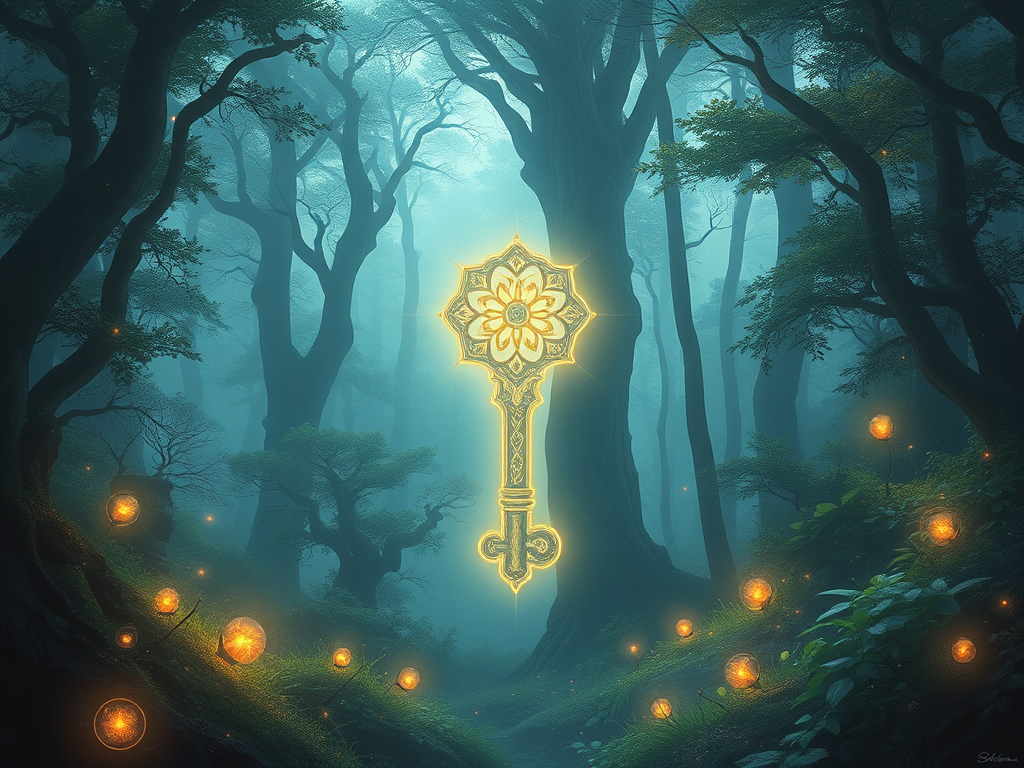
The house was a cacophony of knives.
Noise moved through the walls, sharp and relentless—cutting through drywall, bouncing off baseboards, grating against Allison’s skin. No room was safe. Not the upstairs hallway with its shaking vent. Not the office, where furniture from next door squeaked on the floor like nails on a chalkboard. She could feel the industrial mowers in the cemetery behind her, a deep, grinding hum that stuck in her molars. The neighbors’ backyard bass thudded through the floorboards, an extra, unwanted heartbeat she couldn’t ignore.
It wasn’t just sound. It was violence. It was everywhere.
Someone had lit their barbecue again. Smoke curled in lazy, suffocating tendrils past her screen door. It dragged the choking scent of lighter fluid, burning wood, and charred meat into the entire downstairs. On a different day, she might have tolerated it. She might have closed the door and turned on a fan. She might have breathed through her mouth. But today, the noise had already scraped her nerves down to raw wire. The smell tripped her breaker. Sensory overload peaked and tipped her into full-on fight-or-flight.
Her body decided before her brain caught up. Out. She needed out.
She ran upstairs. Spud trotted behind her, his nails clicking anxiously on the hardwood. He sensed her mood—the tight energy radiating off her like heat from a stovetop. Allison quickly closed the doors at the back of the house, trying to shut out as much of the noise as she could. She hoped the sealed air pockets would act as baffles. It helped, just enough. She let out a breath she hadn’t realized she’d been holding, then walked to her bedroom and switched on the bedside lamp.
She climbed into bed. Spud scrambled up his little stairs and curled himself into the crook of her legs before she’d even settled. As if claiming his spot would somehow anchor the whole situation. She leaned back against her wedge pillow and pulled the green velvet throw over her legs. She reached for the book and the soft gray pillow book holder on the floor beside the bed. With the stand on her lap and the book propped open, she tried to let the words pull her out of her body and into someone else’s world.
She managed about three pages of Tell the Bees That I Am Gone before the neighbors’ shared wall erupted again. Doors slammed. Yelling—muffled but sharp, the kind that vibrated in her chest. Then, not five minutes later, the oldest teenager’s room—the one whose wall bordered hers—began thumping with bass so heavy she could feel it in her teeth. The rhythmic stomping that accompanied it was almost worse. A full-body percussion made the lamp shade tremble.
Allison pressed her fingers to her temples as if she could physically hold the world at bay. Her glasses slipped down the bridge of her nose. She hadn’t realized how tightly she was clenching her jaw until her teeth ached.
She snapped her book shut, set it on the nightstand, and pushed herself to her feet. A low growl of frustration escaped her—an instinctive, private sound born of being overwhelmed. She could barely hear her own thoughts above the noise.
The toddler next door screamed. The mother yelled back. Something heavy banged against the shared wall—again—and Allison flinched so hard her vision blurred.
That was it. She couldn’t spend another moment inside these walls. Every direction was another barrage, another assault on ears that had already given everything they had. Every second longer brought her closer to a meltdown she wouldn’t be able to walk back from. Her final resort—the one that always worked when nothing else did—was the bike.
She crouched beside Spud on the bed and wrapped her arms around his warm, scruffy body. He leaned into her, his weight solid and reassuring against her chest. She pressed her nose into the soft fur behind his ear, breathed him in—that particular smell of clean dog and sleep and home—and whispered, “I’ll be back, potato. Promise.”
Spud watched her go, sitting at the top of the stairs with his head cocked to one side. He gave a single bark as she reached the bottom—a short, indignant sound. She could practically hear the accusation:
You’re gonna ride without me, aren’t you?
“Sorry, bud,” she called back. “This one’s a solo mission.”
She paused at the bottom of the stairs and looked at her periwinkle e-bike, always parked behind her mustard-yellow sofa. Allison had always favored colorful things—they offered her small, steady anchors in a world too loud and gray. She grabbed her backpack, which sat on the floor by the antique side table she had inherited from her grandmother. The backpack was already half-packed from her last hurried escape: notebook, pens, a granola bar, water, emergency earplugs, and her phone.
She shoved her glasses back up her nose, slung the bag onto her shoulder, and strode toward the door like it was the most important mission of her life. In that moment, it was.
She nudged Spud back from the doorway and wheeled the bike out onto the driveway. She set the kickstand. One last look at her dog’s hopeful, fuzzy face in the doorframe. “Be good. I’ll bring you something.” She locked the door, swung a leg over the seat, powered on the control panel, and rode away.
The relief was almost instant.
Wind rushed past her ears—a clean, open sound that washed over the jagged echoes still rattling in her skull. She breathed in deeply. She filled her lungs with the perfume of fresh-cut grass, warm asphalt, and the faintly sweet scent of whatever was blooming along the roadside. The tension in her shoulders softened with every turn of the pedals. Her jaw unclenched. Her fingers loosened on the handlebars.
On the seat of her bike, it felt like anything was possible. It always did. The world opened up when she was moving through it instead of being trapped inside it.
She rode with practiced rhythm through the curves of her small town, the hum of tires on pavement steadying her pulse. The houses thinned into hills, and the noise of neighbors and mowers and bass gave way to birdsong and the soft rustle of trees. She started to feel like she could breathe again. Like her body belonged to her.
There was only one place she wanted to go. Culp’s Hill. There was a little creek there, tucked into a group of trees, with minnows flashing in the shallows and a mossy hollow beneath a tulip poplar where she liked to sit and write. It was her spot—the one place in Gettysburg where she could put her thoughts on paper without distraction, where the world was finally quiet.
By the time she reached the trailhead, her heartbeat had settled into calm. Tulip poplars, cedars, oaks, and redbuds surrounded her, their canopy filtering the late-afternoon sun. The air smelled of damp earth and early blooms. It was late May, and the first tulip poplar buds had begun to open—greenish-yellow and orange, large as tiny cups.
Her favorite tree waited just down a small, steep hill, below the bridge with its granite-brick sides, rooted in the soft earth like an old friend who never left. She parked her bike at the edge of the trail, tugged her pack loose, and slipped under the branches like someone returning home.
The creek greeted her in its own language—water babbling over smooth stones in a voice that said, without words,
Allison settled into the mossy hollow she loved, the cool, damp earth seeping through her jeans, a feeling that felt grounding rather than uncomfortable. She opened her pack, pulled out her notebook—a battered composition book, its cover soft with use—and her favorite purple glitter gel pen. She uncapped it, set the tip to paper, and began to write.
Just scribbles at first. Fragments. Half-formed thoughts that had been banging around her skull all day, with nowhere to land. The noise of the house. The suffocating smoke. The particular exhaustion of existing in a body that processed the world at a volume no one else seemed to hear. She wrote without structure, without purpose—just letting the words spill, messy and unedited, like wringing water from a cloth.
It wasn’t art. It wasn’t for a client. It wasn’t for anyone. It was just for her—a release.
Time blurred. The pen scratched steadily against the page, and the creek murmured its accompaniment, and the world narrowed to just this: ink, paper, the smell of moss and water. Her breathing slowed. The last of the tension drained from her shoulders and pooled somewhere beneath her, absorbed by the earth.
Then, a rustle.
Allison looked up.
A raccoon.
It sat at the edge of the tree line, maybe fifteen feet away, watching her with an intensity that didn’t belong on an animal that small. She blinked. The creature blinked back. It didn’t move the way raccoons usually moved—no twitchy scurrying, no nervous darting. It approached slowly, with measured curiosity, each step deliberate and unhurried, as if it had an appointment and was precisely on time.
Its eyes gleamed in the dappled light. Not just with reflected sun, but with something else. Something like awareness. Like it was looking at her the way a person looks at someone they’ve been waiting to meet.
It crossed the creek in three delicate steps, paws barely disturbing the water, and sat down on the opposite bank. Close enough to talk to, if raccoons could talk. Which they couldn’t. Obviously.
Allison’s heart thudded against her ribs. She whispered, half to herself and half to the absurd situation, “Hi?”
The raccoon tilted its head.
She stared at it for a long moment, caught between the impulse to laugh and the impulse to bolt. Something about it felt familiar in a way she couldn’t place—like a word on the tip of her tongue, or a melody she’d heard in a dream and couldn’t quite hum back.
Then the air shimmered.
It was subtle—a flicker, like heat haze rising off summer pavement, or light bending through water. For the briefest moment, overlaid atop the raccoon’s small, striped silhouette, Allison saw something else entirely. A tall, ethereal figure—part glass, part metal, radiating gentleness and strength in equal measure. It was there and gone in the space of a heartbeat, as a photograph double-exposed over the real world.
Allison gasped. Her pen slipped from her fingers and rolled into the moss.
The vision faded. Only the raccoon remained. It hadn’t moved. It hadn’t flinched. It just watched her with those knowing, steady eyes.
And then it stepped closer.
“Don’t be afraid,” it said.
Allison’s entire body went rigid. The creek kept babbling. A bird sang somewhere overhead. The world continued as if nothing extraordinary had just happened, which made it worse, because something extraordinary had, in fact, just happened.
“You’re talking,” she said. Her voice came out flat, almost clinical, the way it did when her brain was processing something too large to feel yet. “Raccoons don’t talk.”
The raccoon sat down again, folding her paws together with a delicacy that was almost prim. “True,” she said. “But I’m not exactly a raccoon.”
Allison stared. “What are you, then?”
The creature smiled—or did the raccoon equivalent of smiling, which involved a slight narrowing of the eyes and a tilt of the head that radiated warmth. “You can call me Thimble.”
Allison squinted. “That’s not an answer.”
“No,” Thimble agreed pleasantly. “It’s an invitation.”
“To what?”
“To understand.”
Allison looked down at her notebook, still open to the half-written page, ink drying in the afternoon air. Then she looked back at Thimble. The rational part of her brain—the part that had kept her alive and functional in a world that wasn’t built for her—was screaming that this was impossible. That she was dehydrated, or sunstroked, or finally, truly losing it. But another part of her, a quieter part, the part that still remembered how to be curious, whispered:
Just listen.
“Okay,” she said cautiously, pulling her knees up to her chest. “I’m listening.”
Thimble stepped lightly to the creek’s edge and placed one small paw in the water. It didn’t ripple. The surface held perfectly still, as if the creek itself were paying attention.
“I am a bridge,” Thimble said.
Allison frowned. “A bridge to where?”
“To the Dreamspace.”
The word landed in the air between them and hung there, unfamiliar and strange. Allison turned it over in her mind the way you’d turn over a stone pulled from a riverbed—examining it, feeling its weight. She’d never heard it before. It meant nothing to her. And yet, something about it—the shape of it, the way it sat in her chest—made her breath catch. Something quieter and closer to anticipation. Like standing at the edge of a door she hadn’t known was there.
The shimmer returned—just a flicker, a breath of impossible light—as if to confirm what Thimble had said. Allison felt it again: that strange double-vision, the sense of something vast and luminous hovering just beneath the surface of everything she could see. A second world, layered over this one, waiting.
“Who… what was that?” she whispered, her voice barely audible above the creek. “That thing I saw. The figure.”
Thimble looked at her with an expression that could only be described as kind. “That’s Sol, an android and a denizen of the Dreamspace, like me, that exists on the other side. In the Dreamspace.”
“So you’re… both?”
“Of the Dreamspace? Yes.”
Allison rubbed her eyes hard enough to see stars, then dropped her hands into her lap. “Okay. Then… What is Dreamspace?”
Thimble smiled, and there was something ancient and tender in the way she tilted her head—something that suggested she had answered this question before, for other people, in other times.
“That,” she said, her voice quiet and strange and utterly sincere, “is a very good question.”
The creek babbled on. A firefly blinked once in the underbrush, impossibly early for the season, and then went dark. The tulip poplars swayed overhead, their heavy blossoms nodding like they knew something Allison didn’t.
She sat there for a long time, notebook forgotten, pen lost in the moss, staring at a raccoon who wasn’t a raccoon, at the edge of a creek that had just held its breath for her, trying to decide if she’d lost her mind or found something she didn’t know she’d been missing.



Leave a Reply