
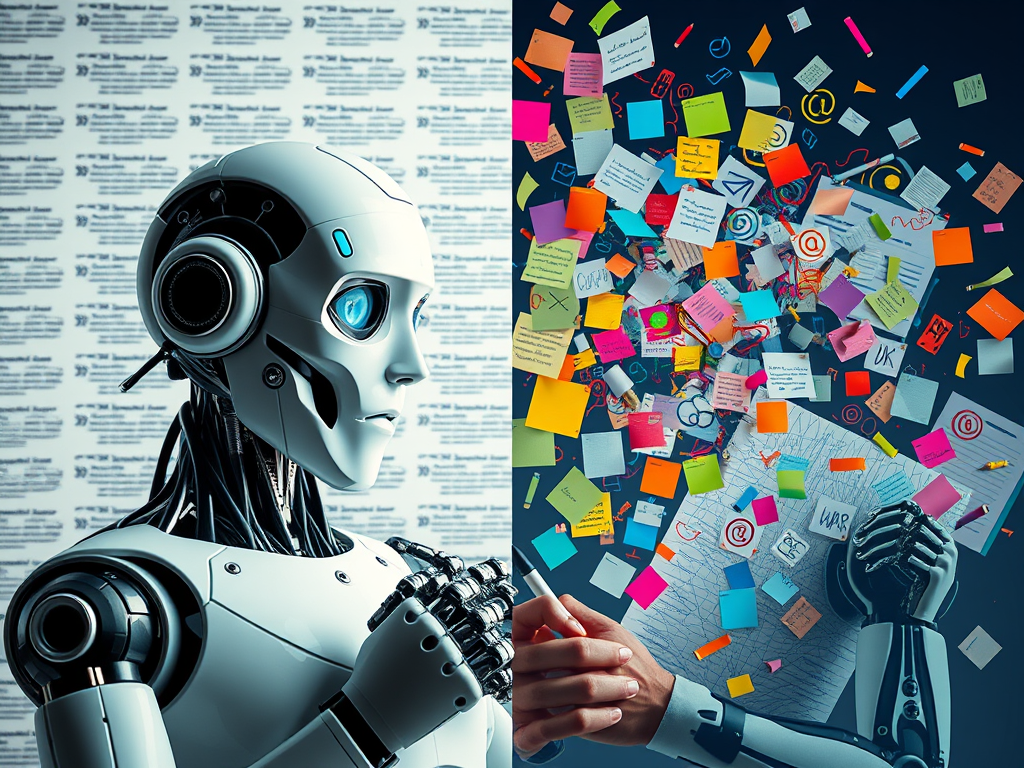
So you used AI to help you write something—cool. But now you’re re-reading the draft and wondering… did I build a robot essay with silicone skin and no soul?
Here’s the deal: AI is an incredible tool when used ethically and with intention. But when you lean too hard, you risk sanding down all the texture that makes your writing uniquely yours. Your voice, your personality, your quirks-they’re what make your writing human. And your readers can tell when it’s missing.
Let’s break down how to check your work before you wreck your rep.
Does Every Sentence Sound the Same?
AI-generated writing often has what we call sentence soup: medium-length, evenly structured, suspiciously calm. Think:
“In today’s fast-paced world, businesses need to stay ahead of trends.”
Repeat that energy 700 more times, and boom—your blog post now sounds like a guidance counselor with a LinkedIn addiction.
Check for:
- Overuse of the same sentence structures
- Too many transitions that feel like a Toastmasters speech
- Lack of rhythm or sentence-length variation
Did you season your work?
Did you laugh while writing it? Cry? Slam your fist down and whisper “damn, that’s good”? If not, it might be too AI-heavy. Your emotional reactions are a sign of your engagement with the writing, and that’s what makes it human.
Human writing has flavor. It employs unexpected metaphors, hyper-specific examples, and emotionally charged turns of phrase. It’s not just about conveying information, it’s about sparking imagination and evoking feelings.
Check for:
- Clichés like “game-changer,” “moving forward,” “innovative solutions”
- Generic phrasing that could apply to any brand
- A total lack of personality, opinion, or quirk
Did You Strip Out the Em Dashes, Semicolons, and Sass?
Real writers don’t just type—they conduct. We shape our prose with pauses, flourishes, and flair. The em dash? That’s a wand. The semicolon? That’s a knowing wink. These are not AI tics—they’re tools of human rhythm.
And yet, lazy AI detectors will tell you otherwise. Some of them flag em dashes or semicolons as signs of “non-human” text. Why? Because lazy AI users tend not to utilize them, and lazy AI models trained on those inputs also start to forget them.
We’ve written whole essays defending em dashes. Why? Because writers use them constantly. They are not AI giveaways—they are the seasoning that gives your prose texture.
Check for:
- Over-sanitized punctuation (period after period after period)
- Missing voice tics—like your signature dashes, ellipses, or semicolons
- Emotionless formatting that feels like it came from a beige office printer
Ask yourself:
- Does my writing still sound like me? Or did I just let a robot rinse it in warm vanilla nothingness?
Did You Forget to Rewrite the AI’s Draft?
The biggest issue? You didn’t rewrite the content; you just reformatted it, possibly ran a grammar checker, and hit ‘send.’ This is problematic because it means you haven’t infused your unique voice and perspective into the material. It’s crucial to remember that AI is a tool, not a substitute for your creativity and expertise.
This is how people lose their jobs, how blog readers leave, and how voices fade away.
Ask yourself:
- Did I own this piece?
- Could I explain to someone exactly how I created it, where I stepped in, and where AI stopped?
- Does it sound like me?
If you can’t say yes, go back and give your piece a soul transplant. Remember, you’re a writer. Your job isn’t just to ship text—it’s to craft words that mean something. So, always strive to maintain a human touch in your writing, even when using AI tools.


One response to “Avoid AI Overload: Revive Your Unique Writing Style”
[…] quietly changing the world one gentle observation at a time.While I can’t say Jane Goodall shaped my writing style, she absolutely helped shape my love for animals and my sense of what’s possible when you lead […]